Quote Follow-Up for Tradies: 7 Text and Email Templates That Win the Job
Matthew Arraiza
19 November 2026
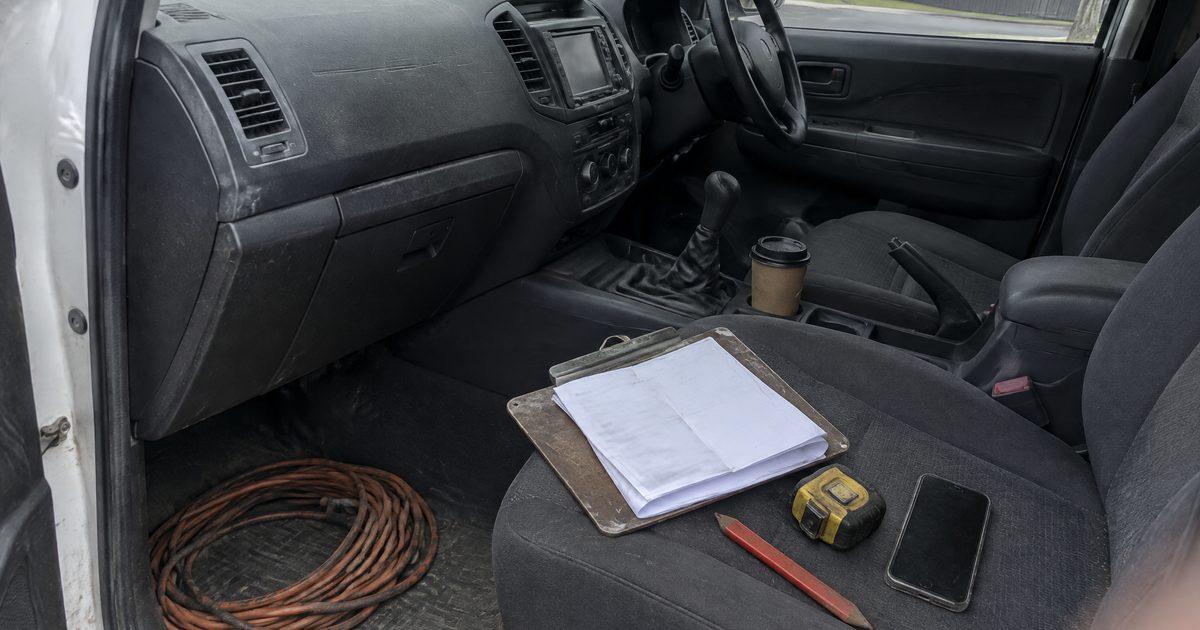
Short answer: Follow up each unanswered quote with a short, spaced sequence, if the customer has agreed to hear from you and hasn't opted out. Text the day you quote, email on day 1 or 2, text again on day 3, share proof and real availability on day 7, then close politely on day 14. Stop when they reply.
You measured up on Monday and sent the quote on Tuesday night. By Friday you've heard nothing. So you leave it, because if they want the job done, they'll ring.
Sometimes they do. Other times the quote is buried under 40 unread emails, they're waiting to talk it over at home, or another tradie checked in and made it easy to say yes.
If you're on the tools all day, chasing quotes is the first job that slips. It's also one of the easiest to hand to a system.
Following up isn't pushy. Fake deadlines are. Below are seven copy-paste templates (four texts, two emails and one that works either way). You'll also get the timing for each, how to mention a real date without inventing pressure, and how to automate the lot so it stops when a customer replies (and how to test that it does).
How do you follow up a quote without being pushy?
Make every message useful, keep it short and stop the moment they reply. Pushy is three texts in a day, a vague "just following up" or a deadline you made up. Helpful is confirming the quote arrived, explaining what's in it, asking one easy question and giving them a clean way to say no.
Here's the sequence the seven templates follow.
| # | When | Channel | Its job |
|---|---|---|---|
| 1 | Same day | SMS | Confirms the quote arrived and invites questions |
| 2 | Day 1-2 | Explains what's in and out, in plain English | |
| 3 | Day 3 | SMS | Asks one easy question |
| 4 | Day 7 | Shows a similar job and a real start date | |
| 5 | Day 14 | SMS | Offers a polite way out |
| 6 | Once, after an explicit no | SMS or email | Thanks them and asks what tipped it |
| 7 | When they say yes | SMS | Confirms the booking, then asks for a review after the job |
Treat it as a starting point, not a rule. For a blocked drain or a dead hot water system, the customer is deciding today, so the first two messages carry the load. For a $60,000 renovation, stretch the gaps and expect a phone call to do more than any email.
What should a quote follow-up say? 7 templates to copy
A good quote follow-up confirms something, answers something or asks one easy question. Swap the square-bracket bits for your own details, then read each one out loud. If it doesn't sound like you, rewrite it until it does.
Every automated message below names your business. The automated texts end with an opt-out line, and both emails carry an [Unsubscribe link] placeholder. Where a message is a direct reply or a transactional acknowledgement, we say so. The consent section explains why.
Use the SMS templates with a reply-capable number, and test replies and opt-outs before you switch the sequence on. On Starter, send them by hand from your own mobile so replies come straight to you.
1. The same-day heads-up (SMS)
Its job is to confirm the quote arrived and make questions easy. Quote emails can land in spam or a promotions folder. A text is harder to miss.
Hi [First name], it's [Your name] from [Business]. I've just emailed your quote for the [job]. If anything doesn't make sense, text me back here and I'll sort it. Reply STOP to opt out.
2. The day 1-2 plain-English walk-through (email)
Its job is to explain the quote the way you would at the kitchen table. A quote is often a page of line items. This email turns it into three sentences a customer can picture.
Subject: Your [job] quote, in plain English
Hi [First name],
Thanks again for having me out on [day]. Here's the short version of your quote.
It covers [the scope in one line]. It doesn't include [the thing people assume is included], so there are no surprises later. The work takes about [number] days, and all you'd need to do is [prep, such as clearing the laundry].
If it's easier to talk it through, reply with a time that suits and I'll give you a call.
Cheers, [Your name], [Business], [Phone]
[Unsubscribe link]
3. The day 3 one-question check-in (SMS)
Its job is to give them something easy to answer. "Any questions?" is easy to ignore. A specific question is easier to reply to.
Hi [First name], [Your name] from [Business] here. Did the quote for the [job] cover everything you were after, or is there anything you'd like changed? Reply STOP to opt out.
4. The day 7 proof and real start date (email)
Its job is to show proof and give them a real date. Pick a recent job nearby. Use a photo you have permission to share and a line from that customer's public review.
Subject: A [job type] we finished in [suburb]
Hi [First name],
We finished a [similar job] in [suburb] last [week or month]. Here's a photo, and here's what the owner said in their review: "[one line from the review]".
If you're still weighing it up, our next available start is [date]. If that suits, reply and I'll pencil you in.
Cheers, [Your name], [Business], [Phone]
[Unsubscribe link]
Solar and battery installers can add this paragraph. Fill in [next step-down date] from the schedule further down. Use 1 January 2027 if you send it before then, or 1 July 2027 if you send it between 1 January and 30 June 2027.
One thing worth knowing. The federal battery rebate steps down at set dates, and the rate goes by the date your battery is installed, not the date you sign. The next step-down is [next step-down date]. Our next install dates are [date] and [date]. If you'd like it installed before the step-down, reply and I'll tell you straight whether we can make it.
The next section explains why that's a fair thing to say and an invented deadline isn't.
5. The day 14 no-pressure close (SMS)
Its job is to end the chase politely and make "no" an easy answer.
Hi [First name], I don't want to keep chasing you. Should I close off your [job] quote, or hold it a bit longer? Either answer is fine. [Your name], [Business]. Reply STOP to opt out.
If your quote has a genuine validity period, this is the place to mention it. Genuine means you'd actually re-quote once it expires. If you'd honour the old price next month anyway, it isn't a real deadline.
6. The lost-quote close, when they say no (SMS or email)
Send it once, after an explicit decline, where it's appropriate. Its job is to thank them and learn something. Keep it short and don't argue the decision.
No worries at all, [First name], thanks for letting me know. If you've got ten seconds, what tipped it? Price, timing or something else? It helps me quote better next time. All the best with the job. [Your name], [Business]
This one is a direct, one-off reply to their decline, not part of the automated sequence, so we've left the opt-out line off. Add one if you send it automatically. If they've unsubscribed, don't send it at all.
Then stop. Don't roll lost quotes into your monthly promotions unless those customers have agreed to hear from you.
7. The won-quote thank-you, then the review request (SMS)
Its job is to confirm the booking straight away, then ask for a review once the work is done.
Send this when they accept. It's a transactional booking confirmation, not a follow-up, so we've left the opt-out line off. It still names your business.
Thanks [First name], great to have you booked in with [Business]. We'll see you on [date] between [time window]. If anything changes, just reply to this text.
Send this once the job is finished.
Hi [First name], thanks for having us out for the [job]. Would you mind leaving us a quick Google review? Honest feedback helps other locals choose a tradie. Here's the link: [review link]. Thanks from [Business]. Reply STOP to opt out.
Send it to every customer who has agreed to hear from you, not only the ones you think are happy.
Can you put a deadline in a quote follow-up?
Yes, if it's real. A rebate change, a genuine quote expiry or an actual gap in your diary are facts that help a customer decide. An invented "price ends Friday" isn't. The ACCC's guidance on false or misleading claims says a business making a claim about the future must have reasonable grounds for it at the time. It also says it makes no difference whether a business intends to mislead.
The ACCC does act on fake deadlines. In September 2026, retailer James Lane paid a $19,800 penalty after the ACCC alleged it ran "Sale ends today!" messaging on a sale it had already decided to extend (ACCC, 29 September 2026). The ACCC said tactics like these "create a false sense of urgency, pressuring consumers to make rushed purchasing decisions". That was a retailer, not a tradie. The principle carries over to a quote.
| A real date you can mention | Invented pressure to avoid |
|---|---|
| "The next battery rebate step-down is [next step-down date], and it goes by the install date." | "The rebate ends Friday, so sign today." |
| "This quote is valid for 30 days because supplier prices change." (You re-quote after that.) | "This price is only good until Friday", when you'd honour it next week |
| "Our next free start is [date]." | "We've only got one spot left", when you have three |
How do you mention the battery rebate honestly?
State the real date, the real rule and the customer's own figure. The federal Cheaper Home Batteries rebate is a good example because the dates are published and the detail matters.
The Clean Energy Regulator publishes how many small-scale technology certificates (STCs) a battery earns per kWh, based on when it's installed. It's 6.8 per kWh for installs from May to December 2026, 5.7 from January to June 2027, then 5.2 from July to December 2027. The step from 6.8 to 5.7 alone means about 16% fewer certificates per kWh. What that's worth in dollars depends on the certificate price, so give each customer their own figure rather than a headline number.
| Install date | STCs per kWh |
|---|---|
| May to December 2026 | 6.8 |
| January to June 2027 | 5.7 |
| July to December 2027 | 5.2 |
| January to June 2028 | 4.6 |
| July to December 2028 | 4.1 |
Source: Clean Energy Regulator solar batteries page (last updated 29 October 2026), checked 19 November 2026. The full factor applies to the first 14 kWh of a battery, with lower rates above that.
After that, the published table keeps stepping down every six months, to 2.1 per kWh for installs from July to December 2030.
Three details keep the message honest.
- The honest deadline is the next step-down date. Before 1 January 2027, the next two are 1 January 2027 and 1 July 2027. Between 1 January and 30 June 2027, they're 1 July 2027 and 1 January 2028. After that, check the CER's current schedule. Name the one that applies, and say what changes on it.
- Install date counts, not signing date. The CER says "rebates are determined by the installation date, not when a contract is signed". So the honest line is "installed before [next step-down date]", not "sign this week".
- A step-down is not an end date. The CER publishes factors for installs through to December 2030, and the table doesn't say when the program ends. So don't present a step-down, or the table's last date, as the date the rebate ends.
Before the May 2026 change, the CER told retailers not to promise installations ahead of the cut-off unless they were certain the work could be done in time. The same logic applies at every step-down. Give customers your real install dates and let them decide.
Homeowners have reason to be wary. In the ACCC's July 2026 review of unsolicited selling, two thirds of respondents said they had felt pressured when contacted without their permission. Solar panels and energy devices were among the products often bought that way. A follow-up that gives facts and room to decide stands out against that.
General information, not legal advice. The factor changes at each step-down, so check the CER's current schedule before you send.
How do you automate quote follow-up so it stops when they reply?
Start the sequence from one trigger, space the messages with wait steps and set it to stop when a customer replies or decides. Then test that it actually stops before you rely on it.
Here's what that looks like in practice.
- One trigger. Moving a job to "Quoted" in your pipeline starts the sequence. If quotes go out from a separate job app, decide how your follow-up system finds out.
- Wait steps. Use the timings above. Send texts during business hours.
- Stop when they reply. Set the sequence to stop when a customer replies, then test that it does for each channel you use. If they ring you back instead, stop it yourself. Nobody should get an automated nudge on top of a message they're waiting on you to answer.
- Stop on a decision. Marking a quote "won" sends template 7 and queues the review request for after the job. Marking it "lost" ends the sequence. Send template 6 once, after an explicit decline, where appropriate. An unsubscribe ends messaging and never triggers another follow-up.
- Alert a person. When a customer replies, whoever wrote the quote gets notified, so the next message comes from a human. Replies should land in one inbox so nothing gets missed.
- Test replies and opt-outs before you launch. Send yourself a quote, reply to the first text and check that nothing else arrives. Then reply STOP on a second test and check that messaging ends.
If your texts show a business name instead of a phone number, check one more thing. Since 1 July 2026, branded texts from a sender ID that isn't on the ACMA's SMS Sender ID Register show as "Unverified" (ACMA). Whatever you send from, use a reply-capable sending number and test both replies and opt-outs before launching.
New to automation? Our plain-English guide shows how to automate your quote follow-up alongside missed calls, reviews and past customers.
Where does quote follow-up usually break?
In the setups we see, the hand-offs tend to cause more trouble than the wording.
A quote can go out from the job app without anything telling the follow-up system, so the sequence never starts. Or a customer says yes on the phone, nobody marks the quote as won, and they get a "still weighing it up?" text the day before the job.
Both come back to one habit. Before you write a single template, decide who moves a quote to won or lost, and where. It takes a couple of minutes at the end of the day. Without it, the automation is guessing.
Do automated quote follow-ups need consent and an opt-out?
Often, yes, because a follow-up that encourages someone to go ahead with a paid job promotes your services. business.gov.au describes a commercial message as one that "offers, advertises or promotes a business, good or service". Australia's spam rules cover those messages, and the ACMA's guidance on avoiding spam comes down to three things.
- Consent. You need permission before you send marketing messages. business.gov.au says that can be express (they knowingly agreed) or inferred (they gave you their details and it's reasonable to believe they'd expect to hear from you). Someone who asked you to quote may fit the second, depending on the circumstances. Use a clear consent request that explains the messages the customer is agreeing to receive, and record their response.
- Identify. Section 17 of the Spam Act 2003 is headed "Commercial electronic messages must include accurate sender information". In plain terms, say who the message is from and how to reach you.
- Unsubscribe. Section 18 of the same Act says commercial messages "must contain a functional unsubscribe facility". business.gov.au says to remove people no later than 5 working days after they ask, without charging a fee or making them log in.
Our own preference goes a step further. We'd put your business name and an opt-out line on every automated text in the sequence, even the friendly first one. That's a setup choice, not a claim that the law requires it for every message. Check the ACMA's guidance for what applies to yours.
General information, not legal advice.
What does it cost to automate quote follow-up with My Digital Group?
With My Digital Group, automated quote follow-up that handles replies and opt-outs is part of Pro, at $432 a month plus $1,087 setup. Starter, at $215 a month plus $542 setup, follows up new enquiries automatically, but you'd send quote follow-ups like these by hand. Both prices include GST.
Starter is self-serve. It comes pre-built, and you add your details through five guided steps (about 20 minutes). Its 7-day text and email sequence follows up new leads, not sent quotes. Email works from day one, and texts switch on once your business is verified. Starter has no phone number of its own and no two-way SMS. On Starter, send these texts by hand from your own mobile, so replies come straight to you, and honour any opt-out yourself. Automated sequences with two-way SMS are on Pro and Wingman.
Pro adds a local business number, two-way SMS and calling, missed-call text-back and advanced automations. That's what lets a quote sequence run on its own, with replies landing in one inbox. Missed-call text-back also catches the customer who rings about the quote while you're up a ladder. Our team builds it with you, and it goes live in 5-7 business days.
| Plan | Monthly | Setup (one-off) | What it means for quote follow-up |
|---|---|---|---|
| My Digital Group Starter | $215 | $542 | Self-serve. The 7-day text and email sequence follows up new leads. Quote follow-ups are sent by hand. Automated review requests included |
| My Digital Group Pro | $432 | $1,087 | Everything in Starter, plus a local business number, two-way SMS and calling, missed-call text-back and advanced automations. Quote sequences run automatically, with replies in one inbox. Built with you by our team |
Prices in AUD, GST included, checked against our plans page on 19 Nov 2026. Month-to-month, no lock-in. Calls, texts and AI usage are billed at provider cost. The subscription comes with a 14-day trial, and the onboarding fee is charged at sign-up. Our 30-day "Not the Right Fit" guarantee refunds My Digital Group's fees, including onboarding and the first subscription payment. Usage and ad spend are excluded.
Work it out on profit, not job value. If an average job leaves you $500 after materials and labour, one extra won quote a month covers the Pro subscription. That example leaves out the $1,087 setup fee and usage.
See how we set this up for trades businesses on our CRM and marketing for tradies page. Still choosing a system? Our guide to the best CRM for tradies in Australia compares the options.
Disclosure: My Digital Group sells the system described here. The templates work in any CRM or job app that can send scheduled texts and emails.
When isn't this the right fit?
- Your job app already sends quote reminders and you're happy with the results. Some do. Tradify's help centre, for one, describes automated text reminders for sent quotes still waiting on a response. Borrow the wording above if it helps, and keep what you have.
- You send a handful of quotes a month and call every one. A phone call beats any template. You might only need the day-14 close.
- Most of your work is emergency call-outs. Answering the phone matters more than chasing quotes. Start with how to stop losing leads overnight instead.
- Your quotes are big, custom and negotiated. On a $150,000 extension, the follow-up is a conversation. Automate the reminder to yourself, not the message to them.
- Nobody will keep the templates current. The battery line in template 4 depends on the step-down dates (1 January 2027, then 1 July 2027). Someone has to check it against the CER's schedule each time the figure changes.
Where should you start?
Run the drill on your last ten quotes. Count how many unanswered quotes, still open and eligible for follow-up, got a useful second message from you. Every one that didn't is where this sequence starts earning its keep.
A follow-up system has to work in the week you're flat out, not the week you're quiet. If it only runs when you remember, it isn't a system yet.
Want a second set of eyes on where your quotes go quiet? Take the free Brand Health Audit. It takes about two minutes. Or book a free strategy call and we'll walk through your setup.
Frequently asked questions
How do you follow up on a quote without being pushy?
Make every message short and useful, space them out, then stop as soon as the customer replies. Confirm the quote arrived, explain what's in it, ask one easy question and give them a polite way to say no. Avoid three texts in a day, vague 'just following up' messages and deadlines you've made up. Real dates, like a rebate change or your next free start, are fine to mention.
How long should you wait to follow up after sending a quote?
Not long for the first one. A suggested sequence is a heads-up text the same day, a plain-English email on day 1 or 2, a check-in text on day 3, a proof email on day 7 and a no-pressure close on day 14. For urgent jobs, the first two messages matter most. For big renovations, stretch the gaps and pick up the phone.
What should a quote follow-up email say?
Keep it to a few lines in plain English. Thank them for having you out, say what the quote covers and what it doesn't, give a rough timeframe and tell them what they'd need to do on the day. End with an easy next step, like replying with a time for a quick call. Include your business name, contact details and an unsubscribe link.
Can I put a deadline in a quote follow-up?
Yes, if it's real. A genuine quote expiry, your next free start date or a rebate change are facts that help a customer decide. The federal battery rebate, for example, steps down at set dates (1 January 2027, then 1 July 2027) based on the install date. An invented 'price ends Friday' is different. The ACCC says claims about the future need reasonable grounds. This is general information, not legal advice.
Do automated quote follow-up texts need an opt-out?
Australia's spam rules cover messages that promote your services, and many quote follow-ups do. The ACMA's guidance covers consent, identifying who sent the message and a working unsubscribe. business.gov.au says opt-outs must be actioned within 5 working days. We'd put your business name and an opt-out line on every automated text either way. This is general information, not legal advice.
How much does it cost to automate quote follow-up?
With My Digital Group, automated quote follow-up that handles replies and opt-outs is part of Pro, at $432 a month plus $1,087 setup. Pro adds a local business number, two-way SMS, missed-call text-back and advanced automations. Starter, at $215 a month plus $542 setup, follows up new enquiries automatically, but you'd send quote follow-ups by hand. Prices include GST, there's no lock-in, and usage is billed at provider cost.
Matthew Arraiza
Founder & Systems Strategist at My Digital Group. 10+ years helping Australian trades, beauty and fitness businesses systemise, scale and simplify. More about Matthew