Sole Trader vs Company in Australia: Which Actually Saves You Money? (2026-27 Guide)
Matthew Arraiza
5 July 2026
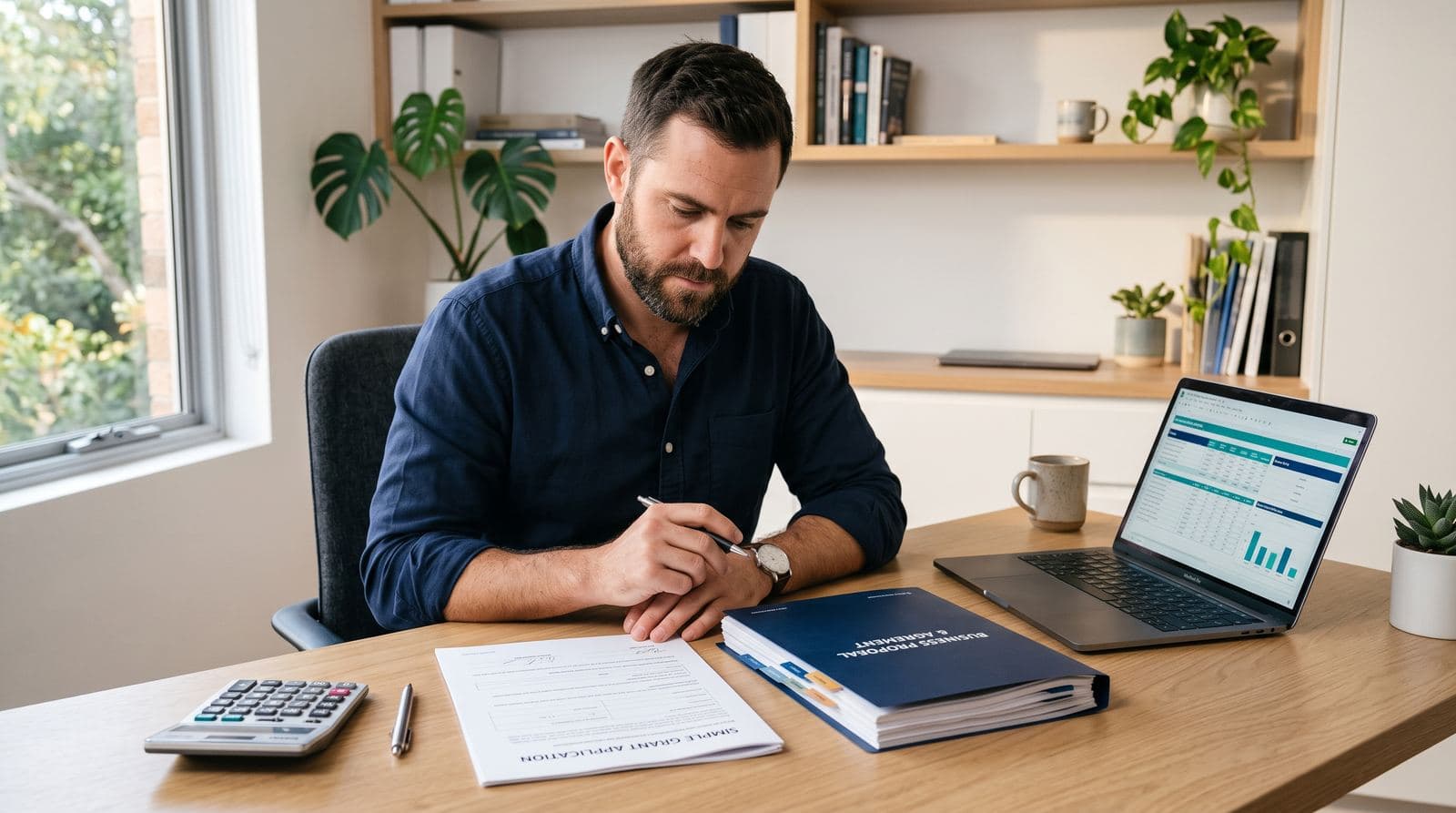
If you ask five people whether you should run your business as a sole trader or a company, you will get five confident answers - and at least three of them will be wrong for your situation.
Here is the thing nobody leads with: for most people starting out, the tax difference is smaller than the internet makes it sound, and the "25% company tax rate" comes with catches that can wipe out the benefit entirely. We help Australian service businesses get set up every week, and this is the plain-English version - with the actual FY2026-27 numbers, including the ones that changed on 1 July.
(New to all of it? Start with our full guide to starting a business in NSW - it covers the whole setup process. This post goes deep on the structure decision.)
Short answer: A sole trader pays personal tax rates on profit; a small company pays a flat 25% - but the company rate does not actually beat personal rates until roughly $135,000 of profit a year, and even then only on money you leave in the company. Pay it out to yourself and you are topped back up to your personal rate anyway. Most people start as sole traders (free, simple) and switch when profits climb, they hire, or they need asset protection. If your income is mainly your personal labour, the PSI rules may cancel the tax benefit of a company entirely - get advice before you restructure.
The two structures in one minute
A sole trader is you. Same legal person, one tax return, full control, unlimited liability. Free to set up.
A company is a separate legal "person." It owns the business, signs the contracts and pays its own tax. You control it as a director and own it as a shareholder. It costs $636 to register with ASIC and $342 a year to keep, plus accounting.
| Sole trader | Company (Pty Ltd) | |
|---|---|---|
| Set-up cost | Free ABN | $636 ASIC fee (typically $800-$2,000+ all-in with an accountant) |
| Running cost | Minimal | $342/yr ASIC + typically $1,500-$3,000/yr accounting |
| Tax on profit | Your personal rates (0-45% + 2% Medicare) | Flat 25% for most small companies |
| Paying yourself | Just take the money - it is already yours | Salary or dividends (rules apply - see Division 7A below) |
| If things go wrong | Personal assets exposed (insurance helps) | Generally protected - with real exceptions (see below) |
| Paperwork | Business section in your own tax return | Separate company return, ASIC annual review, director duties |
The tax question: where the real break-even sits
This is the bit everyone gets excited about, so let us do the actual maths with FY2026-27 rates.
A sole trader pays normal personal income tax on business profit: 0% to $18,200, then 15% to $45,000, 30% to $135,000, 37% to $190,000, 45% beyond - plus the 2% Medicare levy for most people. A small company pays a flat 25% from the first dollar of profit.
Here is what that looks like in real money:
| Yearly profit | Sole trader pays (tax + Medicare) | Company pays (25%) | Who wins |
|---|---|---|---|
| $80,000 | ~$16,100 (about 20%) | $20,000 | Sole trader, by ~$3,900 |
| $135,000 | ~$33,700 (about 25%) | $33,750 | Line ball - the break-even sits right about here |
| $150,000 | ~$39,600 (about 26%) | $37,500 | Company, by ~$2,100 - with a catch |
Two things most articles will not tell you:
1. Below about $135,000 of profit, the sole trader usually pays less tax. The flat 25% sounds low, but a sole trader's first $18,200 is tax-free and the next chunk is taxed at just 15%. The company pays 25% on everything from dollar one.
2. Above $135,000, the company only wins on money you leave in the company. The moment you pay profit out to yourself, the advantage shrinks: salary is taxed at your personal rates (plus the company must pay 12% super on it), and dividends carry franking credits that top you up to your marginal rate anyway. Franking stops you being taxed twice - but it also means the 25% rate is mostly a deferral of tax, not an escape from it. The genuine win is for owners reinvesting profit into growth - stock, equipment, staff, marketing - inside the company.
The three catches that can flip the answer
- The PSI trap. If your income is mainly (more than half) a payment for your personal skills and effort - common for solo consultants, contractors and one-person trades - the ATO's personal services income rules can attribute that income straight back to you personally, company or not. The 25% rate simply does not apply. There are tests you can pass to escape this, but do not restructure assuming you will - ask an accountant first.
- Division 7A - the company's money is not your money. Take cash out of your company without making it salary or a proper dividend, and the ATO can deem it an unfranked dividend - taxed in your hands with no credit attached. Private companies are not personal wallets, and this rule catches people every single year.
- The CGT discount. Individuals (including sole traders) get 50% off capital gains on assets held over 12 months. Companies get no CGT discount at all. If your plan involves building something and selling it later, this one deserves real advice before you choose.
A few smaller differences that matter as you grow: sole traders can generally offset business losses against other income like a salary (subject to the ATO's non-commercial loss rules), while company losses stay locked inside the company for future years. Super is optional for sole traders but compulsory (12%) on any wage your company pays you. And once income grows, the ATO moves both structures onto quarterly PAYG instalments - prepaying tax through the year rather than in one bill.
The liability question: honest version
The classic pitch is "sole trader = risky, company = safe." Reality is messier.
- Sole trader risk is real but insurable. Public liability and professional indemnity cover the most likely disasters for a low-risk service business. What insurance cannot cover: unpaid business debts if things go badly - those follow you personally.
- Company protection has holes. Directors are personally liable for the company's unpaid PAYG withholding (the tax a business holds back from wages), super and GST under the ATO's director penalty regime - and if those go unreported for long enough, that liability sticks even if the company is wound up. Banks and landlords also routinely require directors of small companies to sign personal guarantees, which puts your personal assets back on the line for those specific debts anyway.
The fair summary: a company meaningfully narrows your risk, especially for contract disputes and workplace incidents. It does not make you untouchable, and it never excuses skipping insurance - our NSW startup guide covers what cover is compulsory and what it roughly costs.
Changing your mind later: easier than you think, but not free
Plenty of owners start as sole traders and switch once the numbers or the risk justify it. Completely normal - here is what the switch actually involves:
- Register the company - $636 ASIC fee; it gets its own ACN, and needs its own new ABN and TFN (your sole trader ABN cannot move across - you cancel it once the switch is done).
- Transfer your business name - ASIC has a transfer process, so you keep trading under the same name.
- Move the business into the company - assets, licences, contracts and any trade mark get transferred. Capital gains tax can apply here, but rollover relief may be available if the conditions are met - this is squarely accountant territory.
- Update everything else - bank accounts, insurance policies, GST registration, invoices and your domain registration details.
All-in, a properly handled switch typically costs somewhere in the low thousands including advice - which is exactly why "start simple, switch when it is worth it" is such common guidance. The mistake is not starting as a sole trader; the mistake is ignoring the numbers once profits climb.
So which one should you pick?
Start as a sole trader if: you are testing the waters, profit is under six figures, you are the whole business, and your risk is insurable. It is free, fast, and you can upgrade later.
Go straight to a company if: you are signing serious contracts or leases from day one, taking on a business partner or investor, hiring early, expecting six-figure profits quickly, or working in a field where getting sued is a real possibility.
Either way, make the call with an accountant, not a blog post - including this one. Your family situation, other income, and what you plan to do with profits all change the answer. This article is general information only, based on FY2026-27 rates - it is not tax, legal or financial advice. If you do not have an accountant yet, The Fox Group on the Central Coast is a solid first call for exactly this conversation - though any registered tax agent can run your numbers, so choose whoever you are comfortable with.
And once the structure is sorted, the real work starts - getting set up and getting found. Our step-by-step NSW startup guide covers the whole journey: registrations, name checks, domains, insurance and the growth stack. Questions about any of it? Call us on 1300 503 713 - no pitch, just straight answers.
Smarter Systems. Stronger Business. More Life.
Matthew Arraiza
Founder & Systems Strategist at My Digital Group. 10+ years helping Australian trades, beauty and fitness businesses systemise, scale and simplify. More about Matthew